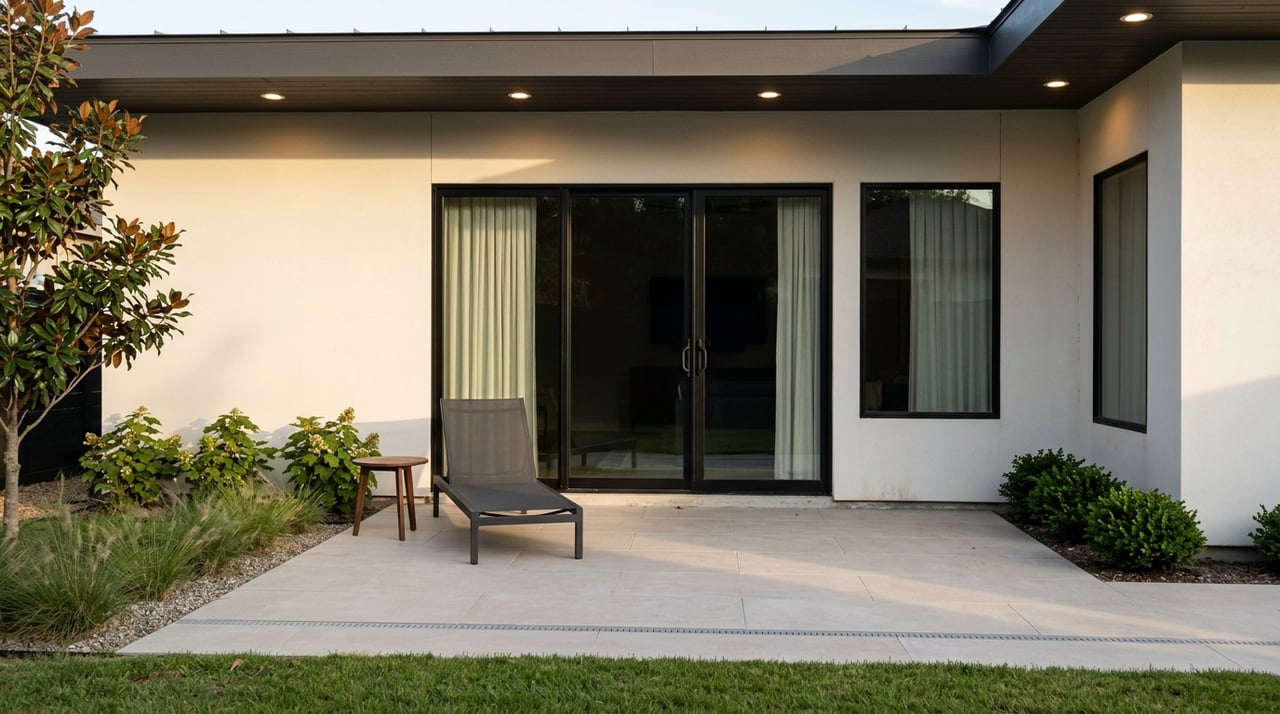
Thinking about buying an investment property in South Fulton while living in another state? That can be a smart move, but it also comes with a very different set of risks than buying close to home. If you want to invest with more confidence, you need to understand the local housing mix, rental demand, renovation rules, and the kind of team that keeps a remote property running smoothly. Let’s dive in.
South Fulton market basics
South Fulton is a large suburban city with an estimated 112,820 residents and 40,323 households as of July 1, 2025. The city has an owner-occupied housing rate of 71.5%, which means it remains more owner-heavy than many investor-target markets.
That said, rental demand is still very real. South Fulton’s housing assessment says renters made up 30.8% of households in 2022, and the city’s median gross rent was $1,702. For an out-of-state investor, that points to a market where rentals have a place, but where tenant expectations may be shaped by a suburban, ownership-oriented environment.
South Fulton also shows clear commuter-suburb patterns. The average travel time to work is 32.5 minutes, and the average household size is 2.73. Those numbers help explain why practical layouts, predictable maintenance, and easy communication can matter so much in a rental property here.
What the housing stock tells you
South Fulton’s housing stock is mostly suburban in form and function. According to the city’s 2025 housing assessment, 78% of housing is single-family detached, 7.9% is single-family attached, 11.2% is multifamily with 5+ units, and 2.1% falls into missing middle housing.
For you as an investor, that matters. In a market dominated by detached homes and townhome-style product, your likely competition is not just other rentals. It is also the broader for-sale housing stock and other landlords offering suburban features tenants may already expect.
Age of inventory matters too. The same housing assessment says 61% of housing was built in 2000 or later, while 39% was built before 2000. That means some properties may be fairly straightforward from a systems and maintenance standpoint, while others may need more serious budgeting for updates, repairs, or code-related work.
What pricing looks like
South Fulton’s housing assessment offers a useful snapshot of 2024 average sale prices:
- Single-family homes: $320,760
- Townhomes: $247,227
- Small multifamily: $189,900
Those numbers suggest that South Fulton can offer multiple entry points depending on your strategy. If you are looking at a BRRRR-style plan, small multifamily or older attached housing may look attractive on paper, but only if the zoning, rehab scope, and compliance path are clear before you close.
If your goal is a lower-maintenance hold, newer single-family or attached homes may offer a different risk profile. The right fit depends less on citywide averages and more on the specific property, condition, and surrounding block-level context.
Rental demand is not the same as easy investing
One of the more important shifts in South Fulton is pricing pressure in the rental market. The city’s housing assessment says rental units priced at $1,000 or less fell from 38.3% in 2017 to 7% in 2022.
That does not automatically mean every rental performs well. It does mean that bargain-basement product is making up a smaller share of the market, and that a tired property may struggle more than you expect if it is not clean, functional, and market-ready.
In practical terms, remote investors should be careful about assuming that “cheap plus rent-ready enough” is a winning formula. In South Fulton, well-kept homes are likely to compete better than under-improved rentals, especially in a market where a large share of housing is owner-oriented and expectations may lean toward solid upkeep.
Why block-by-block analysis matters
South Fulton is not a market you should underwrite with a broad brush. The city’s housing assessment notes rising costs, higher vacancy and blight in some areas, and a lack of diverse housing types.
That means citywide stats can only take you so far. A property that looks strong in one pocket may perform very differently from a similar property elsewhere in the city.
For out-of-state buyers, this is one of the biggest risks. If you are not physically present, it is easy to over-rely on spreadsheet assumptions and miss street-level differences that affect tenant demand, maintenance patterns, and exit options.
Zoning should come first
Before you focus on finishes, rent estimates, or refinance projections, confirm the property’s legal use. South Fulton’s Planning & Zoning division states that zoning regulates legal use, including lot dimensions, setbacks, and building square footage.
The city’s zoning ordinance includes single-family, two-family, townhouse residential, apartment, manufactured-home, and mixed-use districts. If you are buying from out of state, that means you should verify far more than just whether a property “looks rentable.” You need to know what the site legally allows.
South Fulton also offers pre-application meetings and zoning certification letters. For remote buyers, those tools can be especially helpful when you want clarity on use, redevelopment scope, or whether your plan matches current local rules.
Renovation in South Fulton requires coordination
If your strategy involves updates, value-add improvements, or a flip, plan for active project management. South Fulton’s Building Permits page says the city processes permits for new construction, demolitions, alterations, additions, renovations, sheds, fences, retaining walls, and mechanical, electrical, and plumbing work.
The city also says inspection requests are submitted through its online portal. That may sound convenient, but for an absentee owner, it means you still need someone local who can coordinate access, monitor timelines, handle corrections, and keep re-inspections from turning into costly delays.
This is where many out-of-state investors get surprised. The issue is not just whether a contractor can do the work. The issue is whether your full team can move a project through South Fulton’s permit and inspection process without losing time and money.
Code changes can affect your rehab budget
Georgia code requirements are also changing. According to the Georgia Department of Community Affairs, new mandatory state minimum standard codes take effect January 1, 2026, including the 2024 IRC, IBC, IMC, IFGC, IPC, ISPSC, plus 2026 Georgia amendments to the 2023 NEC.
For you, that means an older property may require more than cosmetic improvements once walls are opened or systems are touched. A rehab budget based only on visual updates can quickly become unrealistic if current-code work enters the picture.
This does not mean older homes should be avoided. It means you should underwrite them carefully, with inspection and contractor input that reflects today’s code environment, not just the age of the house.
Multifamily and vacant-property rules matter
If you are considering multifamily or a heavier repositioning strategy, pay close attention to city compliance. South Fulton’s Applications and Forms page lists a Multi-Family Rental Housing Packet and an Abandoned or Vacant Property Registration form.
The city’s Business License page also says that any structure with four or more multifamily rental units must be inspected annually for code compliance. That is a key operational detail for remote investors because it affects budgeting, readiness standards, and how closely you need to manage the asset year after year.
In other words, multifamily can offer opportunity, but it also comes with a more active compliance burden. If you live out of state, that burden needs to be built into your management plan from day one.
Build a local team before you buy
Distance risk is real, but it can be managed with the right people. Based on South Fulton’s permitting process and Georgia’s landlord-tenant framework, a practical out-of-state ownership team should include:
- A local real estate professional who can help evaluate submarket fit and property viability
- A property manager who can oversee tenant communication and maintenance response
- A contractor who understands South Fulton permitting and current Georgia codes
- A property inspector
- Georgia-based legal support for landlord-tenant matters
- Georgia-based tax support
This is not overkill. It is how you avoid expensive mistakes when you cannot be on-site to solve every issue yourself.
Lease operations need to be clean and consistent
Georgia consumer guidance says security deposits are intended to cover unpaid rent or damages and are generally returned within 30 days when there are no legitimate deductions. It also strongly recommends renters’ insurance.
For a remote owner, this highlights the need for strong documentation. You want a consistent move-in process, clear condition records, a defined move-out procedure, and easy-to-understand lease communication.
Georgia’s Department of Community Affairs also notes that its landlord-tenant handbook is only an overview, and the Georgia Attorney General says the state cannot step in to resolve landlord-tenant disputes for you. In practice, that means remote owners should treat Georgia-based legal guidance as a core part of operations, not an afterthought.
South Fulton planning can keep evolving
South Fulton completed its updated Comprehensive Plan in April 2026, and the city says it revisits affordable housing and community development needs every five years through its planning process. For investors, this is a reminder that local priorities do not stand still.
That matters most if your strategy depends on redevelopment, repositioning, or long-term area change. A market can be promising and still require you to stay current on policy, planning, and compliance expectations.
What to expect as an out-of-state investor
If you invest in South Fulton from another state, expect a market that offers real opportunity but rewards careful execution. You are looking at a largely suburban, owner-heavy city with meaningful rental demand, a housing stock split between newer product and older pockets, and local rules that matter more than many remote buyers expect.
The biggest takeaway is simple: South Fulton is not a passive market for careless ownership. Success usually comes from parcel-level analysis, realistic rehab planning, and a dependable Georgia-based team that can manage the details you cannot handle from afar.
If you want a concierge-level partner to help you evaluate opportunities, plan renovations, and manage your investment strategy in Metro Atlanta, connect with TK Real Estate Group Inc.
FAQs
What should out-of-state investors know about South Fulton rental demand?
- South Fulton has a renter share of 30.8%, a median gross rent of $1,702, and an owner-heavy housing profile, which suggests real rental demand but also tenant expectations tied to well-kept suburban housing.
What property types are most common in South Fulton for investors?
- The city’s housing stock is mostly single-family detached homes at 78%, followed by single-family attached at 7.9% and multifamily with 5+ units at 11.2%, so many investors will be evaluating suburban-style assets rather than dense urban product.
What should remote buyers expect from South Fulton zoning and permits?
- You should expect zoning to control legal use, setbacks, and site dimensions, and you should plan for permits and inspections on many renovation items, including structural and trade work.
What should out-of-state investors budget for when rehabbing in South Fulton?
- You should budget for both visible improvements and possible current-code work, especially with Georgia’s updated mandatory state minimum standard codes taking effect on January 1, 2026.
What compliance issue matters for South Fulton multifamily investors?
- In South Fulton, any structure with four or more multifamily rental units must be inspected annually for code compliance, so multifamily ownership requires ongoing operational planning.
What team does an out-of-state South Fulton investor need?
- A strong remote ownership team usually includes a local real estate professional, property manager, contractor, inspector, and Georgia-based legal and tax support.