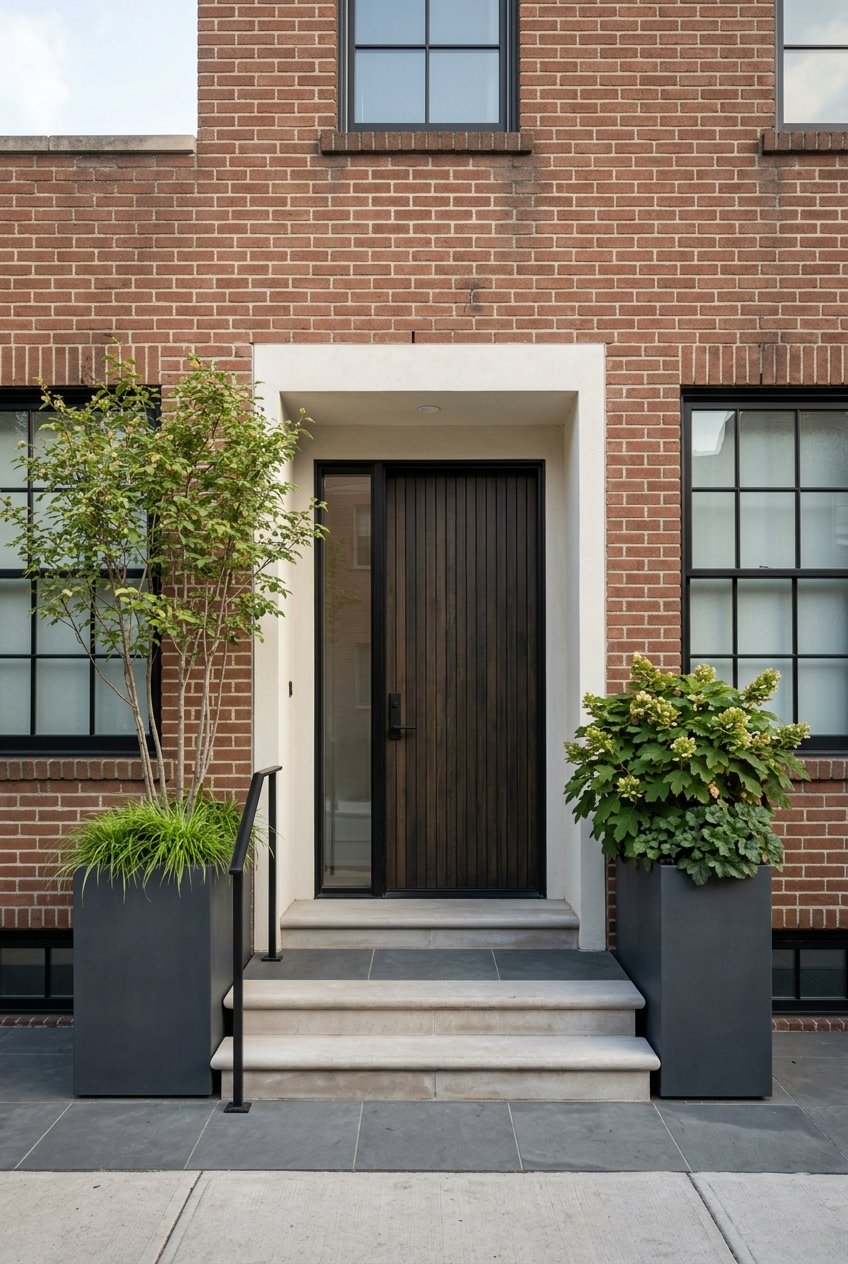
Buying your first home in Hudson County can feel like trying to hit a moving target. Prices are high, inventory can be competitive, and what counts as a “starter home” here often looks very different from what you might picture in other parts of New Jersey. The good news is that with the right expectations and a clear plan, you can make a smart first step into ownership. In this guide, you’ll learn what a starter home really looks like in Hudson County, how to think about budget beyond the list price, and what to watch for before you make an offer. Let’s dive in.
What a starter home means in Hudson County
In many markets, a starter home might mean a small detached house with a yard. In Hudson County, that is usually not the case. Here, a starter home is more often an entry point into ownership, such as a condo, co-op, townhouse-style unit, rowhouse, or a smaller 2-to-4-family property.
That makes sense when you look at the local numbers. Census data shows that only 30.7% of housing units in Hudson County are owner-occupied, the median value of owner-occupied homes is $539,700, and median monthly owner costs with a mortgage are $3,300. In a county with high housing costs and a renter-heavy population, first-time buyers often need to focus on practical ownership options rather than a traditional single-family home.
Recent price data also shows how challenging the entry point can be. NJ Realtors reported an April 2026 median sales price of $652,500 for single-family homes and $750,000 for townhouse-condo homes in Hudson County. Zillow’s typical county home value was $638,652 as of April 30, 2026, which supports the same big-picture reality: buying your first home here takes planning.
Where first-time buyers often start
If you are looking for a more budget-conscious starting point, town and neighborhood differences matter. Zillow’s typical home values during the research period were about $560,022 in Union City, $664,939 in Jersey City, and $852,673 in Hoboken. Those figures are not fixed price bands, but they do show how much the market can vary across Hudson County.
Current sample listings also show that smaller units can create a lower entry point. At the time of research, Union City had one-bedroom condos listed around $219,995 to $469,000. Jersey City included a one-bedroom condo at $399,000 and a two-bedroom condo at $585,000, while Hoboken showed one-bedroom condos at both $450,000 and $969,000.
Within Jersey City, some neighborhoods showed lower typical values than others. Zillow’s neighborhood data placed McGinley Square at $471,406, Journal Square at $520,446, Greenville at $542,758, West Side at $542,330, and Bergen-Lafayette at $575,792. If your budget is tight, these areas can be useful reference points as you compare location, home type, and commute options.
Why condos and smaller multifamily homes dominate
The local housing stock shapes almost every first-time buyer search in Hudson County. Jersey City’s 2025 housing element states that 53.4% of units are in multifamily structures, 31.4% are in 2-to-4-unit buildings, and only 14.8% are single-family homes. That means your search will likely center on attached housing, not detached homes.
The pattern is even more pronounced in some nearby markets. In Hoboken, 92.6% of housing units are in structures with three or more units, and only 1.4% are detached single-family homes. In Union City, 76.1% of housing units are in structures with three or more units, while just 4.7% are detached homes.
For you as a buyer, this means it is important to understand the pros and trade-offs of condos, co-ops, and smaller multifamily properties. These home types can open the door to ownership, but they also come with building rules, shared costs, and document review that you need to take seriously.
What to know about condos and co-ops
A condo can come in many forms, including high-rise buildings, midrise buildings, garden-style communities, and multistory townhome layouts. Those formats fit Hudson County’s urban housing stock well. They can also give first-time buyers a wider range of price points and locations than detached homes typically offer.
But monthly fees are a major part of the equation. Fannie Mae notes that condo fees may cover exterior repairs, common areas, water, sewer, trash, and amenities. You should also expect to review reserve funds, bylaws, insurance coverage, and any special assessments before moving forward.
Co-ops require even closer review. Fannie Mae notes that the co-op corporation or board sets and enforces rules, collects fees, and may affect insurance needs. In practice, that means your approval process and ongoing ownership experience can be shaped not just by the unit itself, but also by the building’s finances and governance.
Focus on monthly cost, not just price
One of the biggest mistakes first-time buyers make in Hudson County is focusing too much on the listing price. A home may look affordable at first glance, but the real monthly cost can change quickly once you add taxes, insurance, HOA dues, co-op fees, parking, and other ownership expenses. In a market where median monthly owner costs with a mortgage already sit at $3,300, this matters.
That is why your budget should include more than principal and interest. You want to compare the full carrying cost of each home you consider. In many cases, a less expensive unit with high monthly fees may be less affordable over time than a slightly higher-priced unit with healthier building finances and lower ongoing costs.
Building condition also matters for financing. Fannie Mae notes that condo or co-op projects with critical repairs, major deferred maintenance, litigation, or inadequate insurance can become ineligible for sale to Fannie Mae until those issues are resolved. In simple terms, a building problem can become your financing problem.
First-time buyer programs in New Jersey
If you are buying your first primary residence in Hudson County, state programs may help you get started. The New Jersey Housing and Mortgage Finance Agency, or NJHMFA, offers a First-Time Homebuyer Mortgage Program with a 30-year fixed-rate government-insured loan for a primary residence in any New Jersey county. NJHMFA defines a first-time buyer as someone who has not owned a home in the previous three years.
Hudson County buyers may also be able to pair that mortgage with down payment assistance. According to the 2025 NJHMFA fact sheet, Hudson County falls in the tier that offers up to $15,000 in down payment assistance. For buyers working hard to save while paying local rents, that support can make a real difference.
Before you rely on any program, confirm your eligibility early. You should also confirm that the property will be your primary residence and that the building or property type fits program and lender requirements. This step can help you avoid surprises after you have already found a home you love.
How commute shapes your home search
In Hudson County, your commute is often just as important as the unit itself. PATH operates 24 hours a day, 7 days a week, with 13 stations total and 7 in New Jersey. For many first-time buyers, access to PATH, the Hudson-Bergen Light Rail, buses, or ferries can strongly affect both daily life and long-term resale appeal.
Hoboken Station is one of the county’s best-connected transit hubs. It links to multiple PATH services and also connects to NJ TRANSIT trains and buses, the Hudson-Bergen Light Rail, and NY Waterway ferries. Exchange Place, Newport, and Journal Square also provide important connections within Jersey City.
Union City has a different transit profile. NJ TRANSIT says the Hudson-Bergen Light Rail serves Bayonne, Jersey City, Hoboken, Weehawken, Union City, and North Bergen, and Bergenline Avenue Station is in Union City. NJ TRANSIT also notes that Hudson County bus service connects the county with Manhattan, Newark, and beyond, and its NewBus Hudson study area covers 32 routes.
These transit patterns matter because many local households are car-light. Jersey City’s housing element reports that 70.4% of Hudson County households have no automobile or only one vehicle. If you are comparing two homes at similar prices, the one with better transit access may fit your daily routine and budget more comfortably.
A smart starter-home strategy
A strong first-time buyer strategy in Hudson County starts with clarity. You need to know what you can comfortably spend each month, what home types fit your financing, and how much commute trade-off you are willing to accept. That helps you stay focused when options feel limited or prices feel overwhelming.
It also helps to think in tiers rather than chasing a single perfect property. You might compare a smaller condo in Hoboken, a more moderately priced unit in Jersey City, and a lower entry point in Union City. Seeing those options side by side can make your trade-offs clearer.
A practical pre-offer checklist includes:
- Confirm first-time buyer program eligibility
- Verify the home will be your primary residence
- Review HOA or co-op financials and rules
- Check monthly fees, taxes, insurance, and parking costs
- Ask about reserves, special assessments, and building condition
- Confirm the property will finance cleanly with your lender
- Compare commute options before making a final decision
This is where an education-first approach makes a real difference. The right guidance is not just about opening doors. It is about helping you compare total cost, building quality, financing fit, and lifestyle needs so your first purchase supports your long-term goals.
If you are planning your first purchase in Hudson County, working with a team that leads with education and advocacy can help you move with more confidence. TK Real Estate Group Inc is here to help you understand your options, weigh the numbers, and take the next step with a clear strategy.
FAQs
What counts as a starter home in Hudson County for first-time buyers?
- In Hudson County, a starter home is often a condo, co-op, townhouse-style unit, rowhouse, or smaller 2-to-4-family property rather than a detached single-family home.
How much down payment help is available for Hudson County first-time buyers?
- NJHMFA’s 2025 fact sheet places Hudson County in the tier with up to $15,000 in down payment assistance for eligible first-time buyers.
Why do Hudson County condo fees matter so much?
- Condo fees can add significantly to your monthly housing cost and may cover items like exterior repairs, common areas, water, sewer, trash, and amenities.
Which Hudson County areas may offer lower entry prices for first-time buyers?
- Based on the research data, Union City and some Jersey City neighborhoods such as McGinley Square, Journal Square, Greenville, West Side, and Bergen-Lafayette may offer more budget-friendly starting points than Hoboken.
What should first-time buyers review before offering on a condo or co-op in Hudson County?
- You should review the building’s financials, reserve funds, rules, insurance coverage, special assessments, and overall condition, while also confirming the property fits your lender’s financing requirements.